
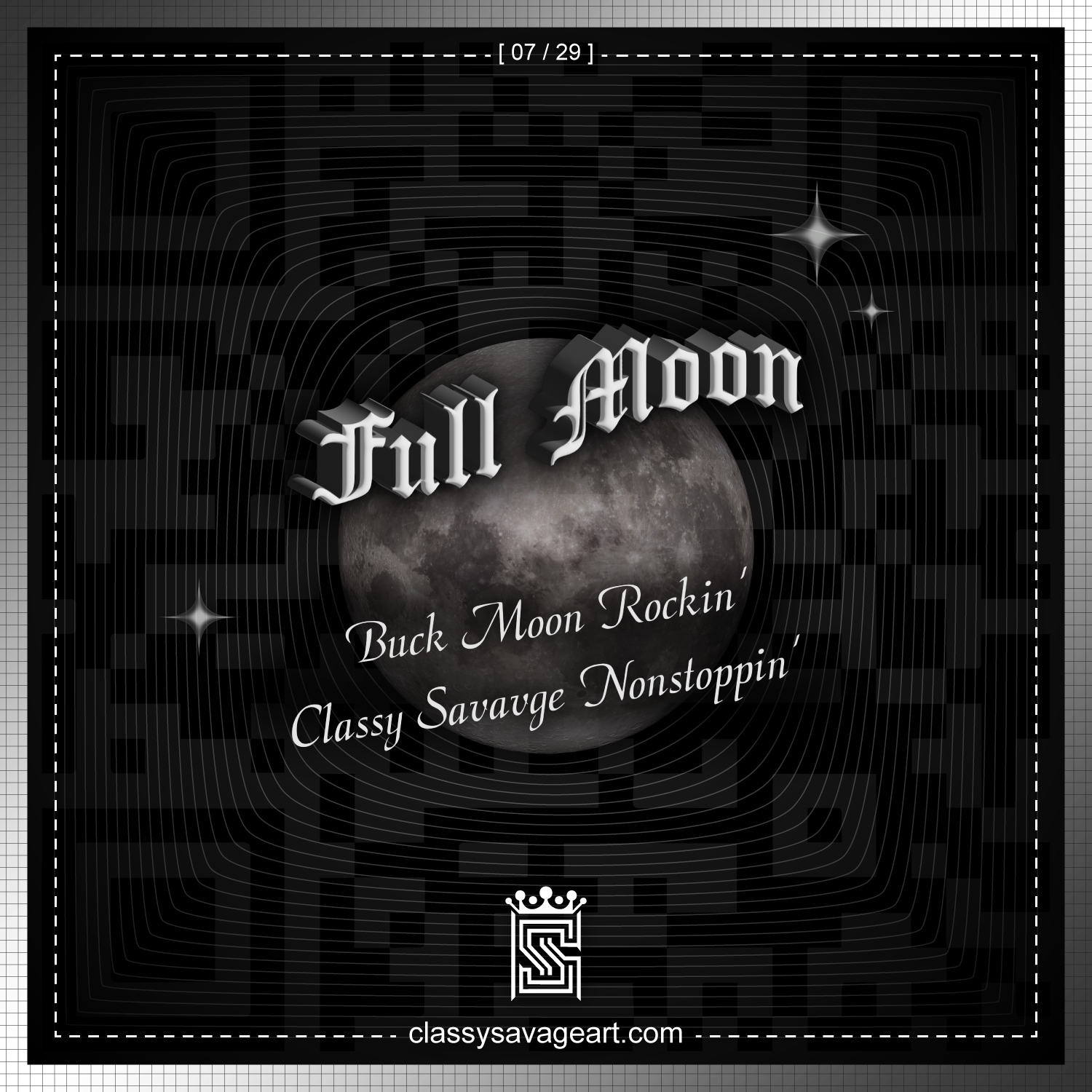
Summer’s full Moon takes the sky.
Look Up After Sunset
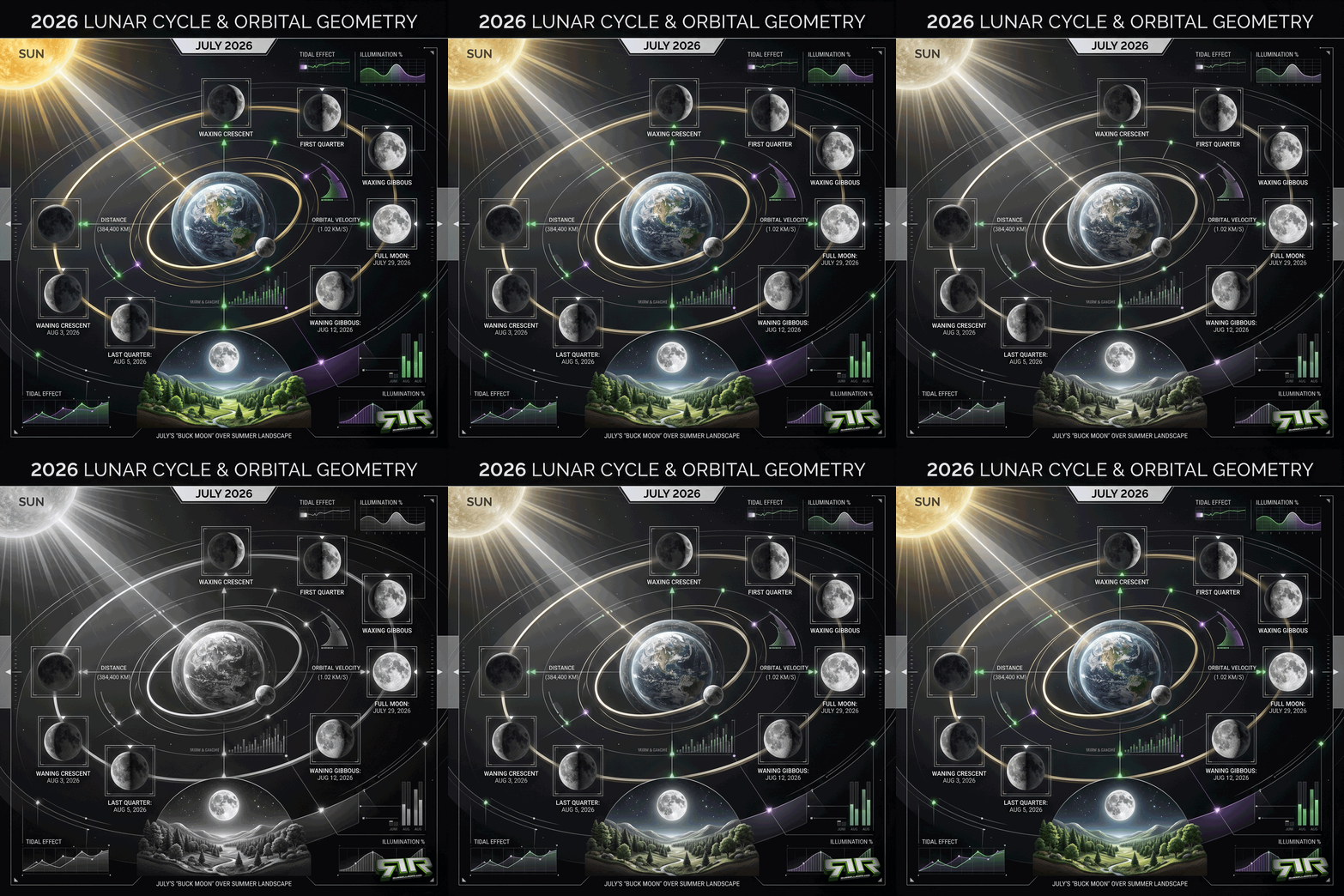
The July full Moon arrives on July 29, 2026, commonly known as the Buck Moon. The Moon reaches its full phase when Earth sees the lunar hemisphere facing us illuminated by the Sun, producing the bright circular disk that has shaped calendars, navigation, agriculture, art, science, and human storytelling for generations. In 2026, peak full Moon occurs on July 29; the exact clock time depends on location and time zone, and the Moon can appear essentially full around the peak night as well.
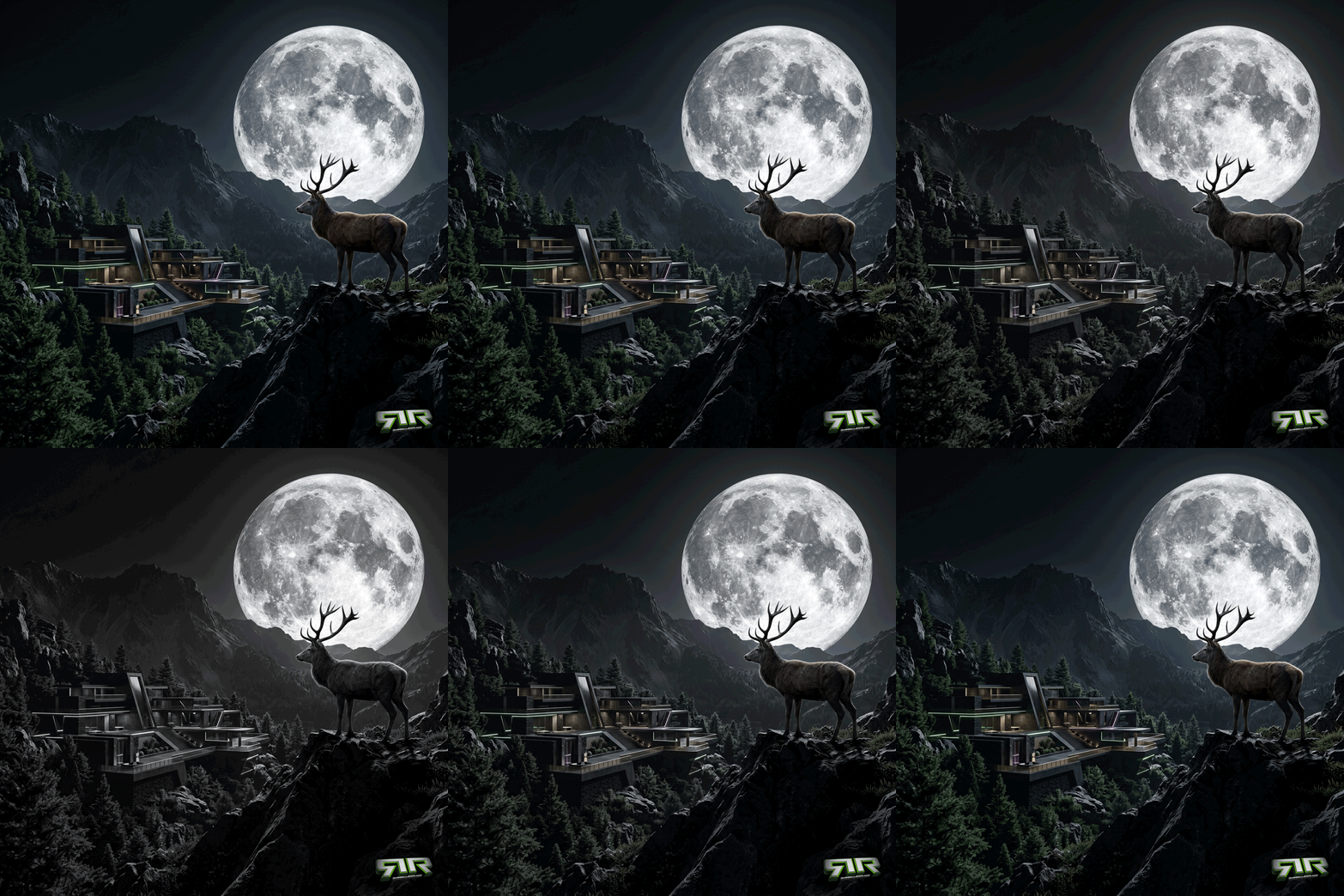
The name Buck Moon is commonly linked to the seasonal period when male deer are growing new antlers. Traditional full-Moon names vary across cultures and sources, so no single name represents every community’s relationship with the lunar cycle. What is universal is the astronomy: sunlight always illuminates half of the Moon, while the changing geometry among the Sun, Earth, and Moon determines how much of that illuminated half we see. On July 29, step outside after sunset and watch one of humanity’s oldest recurring spectacles perform without a screen.
Vibes
Bright lunar light, warm summer darkness, long shadows, quiet streets, and the sky reminding everyone to look away from a screen.
How to Observe
- Find an open location with a clear view of the horizon.
- Check local moonrise time before heading outside.
- Photograph the Moon near buildings, mountains, or trees for scale.
- Use binoculars to explore lunar surface features.
- Learn the basic phases of the lunar cycle.
- Spend part of the evening outside without artificial distractions.
A full Moon does not suddenly become brighter because people gave it a seasonal name. The name adds culture and memory to an astronomical cycle already happening through orbital geometry. Science explains what you are seeing; tradition explains some of the ways people learned to remember it.
Pulse Check
Where would you watch the Buck Moon if you could choose any view on Earth?
The Moon has been observed by every civilization that ever looked upward, yet it never becomes ordinary. Every full phase connects the modern city, the ancient observer, the astronaut, the photographer, and the person standing alone outside at night. Same Moon. Different moment.
Interesting Facts
- The July 2026 full Moon occurs on July 29.
- The July full Moon is commonly known as the Buck Moon.
- The lunar phase cycle repeats approximately every 29.5 days.
Verified Links
- Moon Phases — NASA @ https://science.nasa.gov/moon/moon-phases/
- July 2026 Skywatching Tips — NASA @ https://science.nasa.gov/solar-system/whats-up-july-2026-skywatching-tips-from-nasa/
- Buck Moon @ https://www.timeanddate.com/astronomy/moon/buck.html
Popular Hashtags
#BuckMoon #FullMoon #JulyFullMoon #Moon #MoonPhotography #Skywatching #Astronomy
Famous Quotes
“The moon is a friend for the lonesome to talk to.” — Carl Sandburg
“Everyone is a moon, and has a dark side which he never shows to anybody.” — Mark Twain
“Shoot for the moon. Even if you miss, you’ll land among the stars.” — Les Brown
Step outside, let the city get quiet for a minute, and remember that some of the best views still arrive free.
-

Framed Canvas Print
Price range: $100.00 through $310.00 Select options This product has multiple variants. The options may be chosen on the product page -

Framed Canvas Print
Price range: $100.00 through $310.00 Select options This product has multiple variants. The options may be chosen on the product page -

Framed Canvas Print
Price range: $100.00 through $310.00 Select options This product has multiple variants. The options may be chosen on the product page -

Framed Canvas Print
Price range: $100.00 through $310.00 Select options This product has multiple variants. The options may be chosen on the product page
-

Organic Baby Bodysuit
$30.00 Select options This product has multiple variants. The options may be chosen on the product page -

Organic Canvas Bag
$50.00 Select options This product has multiple variants. The options may be chosen on the product page -

Premium Eco Hoodie
$100.00 Select options This product has multiple variants. The options may be chosen on the product page -

Unisex Denim Jacket
$310.00 Select options This product has multiple variants. The options may be chosen on the product page